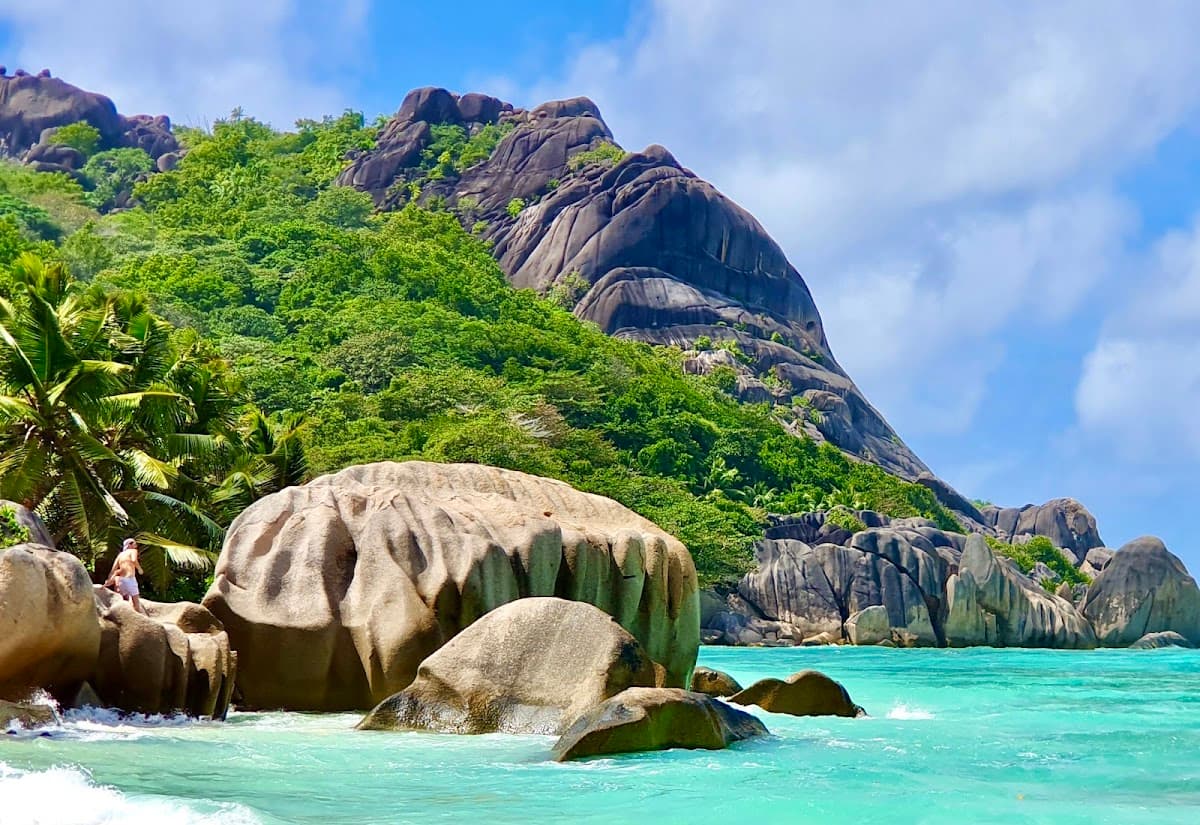
La Digue in March
Good time to visit
March feels like La Digue waking up from its rainy slumber. The weather's inconsistent but improving, and you'll start seeing more travelers on the coastal paths.
Weather
March marks the transition out of monsoon season. Rain becomes less frequent and intense, though you'll still get tropical downpours. Humidity drops slightly to around 75%, and trade winds start picking up.
30°C high24°C low12 rain days
Crowds & Cost
moderate crowds
~$200/day average
March Tips
- •Weather improves significantly after mid-March
- •Book bicycle rentals early as demand picks up
- •Snorkeling conditions start improving as seas calm
All Months
April, May, October, and November deliver La Digue's sweet spot — calmer seas, less rain, and manageable humidity. These months fall between the northwest monsoon (November-March) and southeast trades (May-September), offering the best of both worlds.
April and May see the clearest waters for snorkeling. Anse Source d'Argent's shallow lagoon warms to perfect swimming temperature, while Grand Anse becomes swimmable again after the rougher northwest monsoon period.
October and November bring excellent visibility for photography. Those famous granite boulder shots look their best when the sun sits higher in the sky, creating dramatic shadows and highlighting the pink granite colors.
Avoid December through March if you're sensitive to humidity and rain. The northwest monsoon brings daily afternoon showers and sticky conditions. But here's the upside — accommodation rates drop significantly, and you'll have beaches more to yourself.
June through September means southeast trade winds. Expect rougher seas on the southeast coast beaches like Grand Anse, though Anse Source d'Argent stays protected and swimmable year-round.
La Digue Scores
Solo
6/10
Couples
10/10
Families
7/10
Adventure
5/10
Budget
3/10
Luxury
9/10
BUILD YOUR LA DIGUE PLAN
Insider picks, smart timing, and a plan ready when you are.