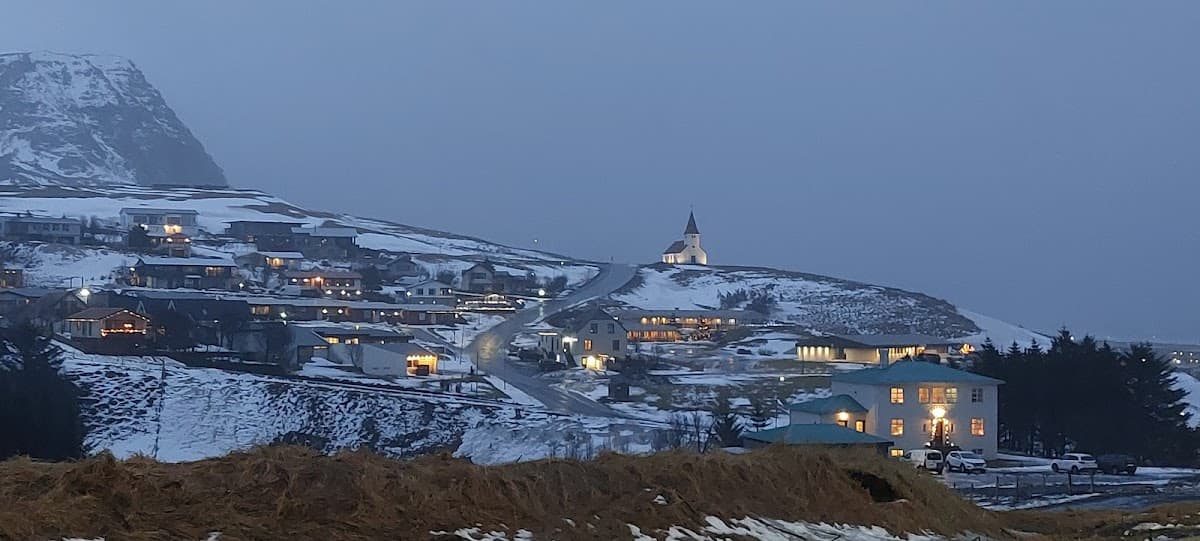
Vík in December
Not the best time
December wraps up the year with Iceland's most challenging conditions. But snow-covered Reynisfjara beach and potential northern lights make it magical for hardy visitors.
Weather
December brings winter's full force with freezing temperatures and frequent snow storms. Daylight reaches its minimum at just 4-5 hours around winter solstice, though the landscape looks magical under snow. Weather can change from calm to dangerous quickly.
2°C high-2°C low17 rain days
Crowds & Cost
low crowds
~$185/day average
Events & Festivals
- •Winter solstice celebrations
- •Christmas markets
- •Northern Lights prime viewing
- •New Year's Eve preparations
December Tips
- •Book accommodations with northern lights wake-up calls
- •Pack serious winter gear including ice cleats
- •Many roads require 4WD or become impassable
All Months
Summer transforms Vík into a completely different place. June through August brings nearly 20 hours of daylight, lupine flowers blooming purple across the landscape, and puffins nesting at Dyrhólaey. This is peak season for good reason — temperatures hover around 15°C, and you can actually see the black sand beaches without getting sandblasted by wind. July offers the warmest weather and best road conditions for exploring nearby attractions. But summer also means crowds and prices that'll shock you. Winter in Vík is not for everyone. December through February brings fierce storms, limited daylight, and road closures that can trap you for days. Yet this is when the Northern Lights shine brightest, and you'll have Reynisfjara practically to yourself. Shoulder seasons offer the best compromise — May and September give you decent weather with fewer tourists and lower accommodation rates.
Vík Scores
Solo
8/10
Couples
8/10
Families
6/10
Adventure
8/10
Budget
5/10
Luxury
5/10
BUILD YOUR VÍK PLAN
Insider picks, smart timing, and a plan ready when you are.