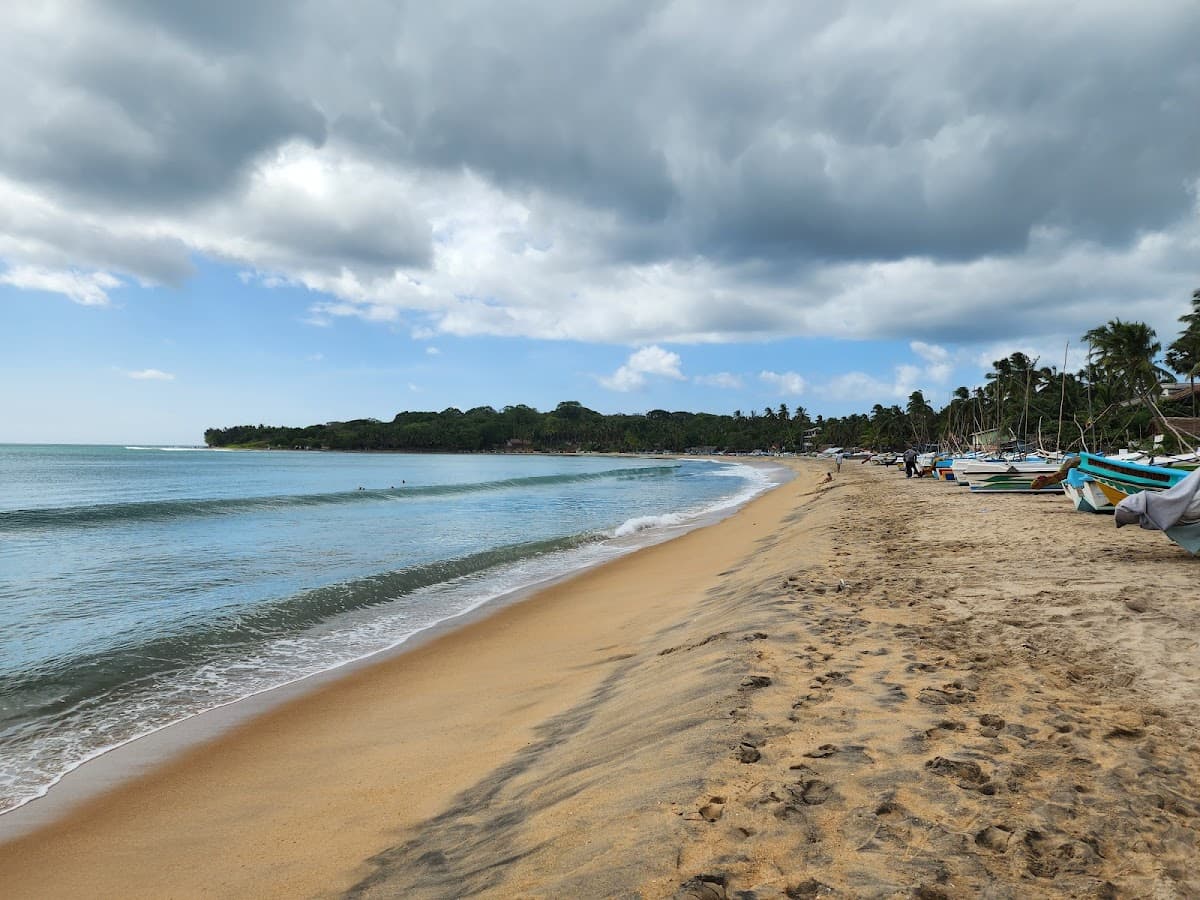
Arugam Bay
Sri Lanka's surf capital where waves meet wild elephants
Arugam Bay isn't your typical beach town. Sure, there are world-class waves that draw surfers from across the globe. But here's what makes it special: wild elephants wander onto the beach at sunset, your dinner costs less than a coffee back home, and the vibe is so chill you'll forget what day it is. This crescent-shaped bay on Sri Lanka's east coast has somehow managed to stay authentic despite its growing reputation. The locals still wave from their tuk-tuks, the fish curry is still made by someone's grandmother, and you can still find empty surf breaks if you know where to look.
Best Months
APR – SEP
~34°C · peak crowds
Culture & Context
BIKINI BEACH, SARONG STREETS
Arugam Bay sits in Sri Lanka's Eastern Province, an area with a significant Tamil Muslim population. That matters. On and off the beach are two very different worlds.
Bikinis at Main Point are totally normal. Walking through the streets of Pottuvil in the same bikini is genuinely disrespectful to the community living there. Keep a sarong or cover-up for anywhere that isn't the sand itself.
Fridays are particularly important: many local businesses close briefly during prayer times, and the pace of the town shifts. The bay has transformed dramatically over the past two decades, going from a quiet fishing village to Sri Lanka's surf capital, with that tension still visible. Local fishermen still launch their colorful boats from the same beach where backpackers park themselves with smoothie bowls.
The east coast was heavily affected by the 2004 tsunami and the decades-long civil conflict before it. Locals are warm and community-minded, partly because the town is so small that everyone genuinely knows each other. That closeness also means bad behavior gets noticed and remembered.
Local Customs
COVER UP OFF SAND
Cover up with a sarong or shirt the moment you leave the beach or enter any shop, restaurant, or local area. Bikinis are fine on the sand; they're not appropriate anywhere else in town.. Arugam Bay runs on a nightlife rotation system.
One venue hosts the whole town each night. Ask any tuk-tuk driver or surf instructor 'where's the party tonight?' and they'll all give the same answer.
Go with it.. Greet locals with 'Ayubowan' (Sinhala) or 'Vanakkam' (Tamil) and press your palms together with a slight bow. It takes two seconds and people genuinely appreciate it..
Wild elephants roam the outskirts of Arugam Bay. Locals advise against walking alone near Elephant Rock in the early morning or late afternoon when elephants are most active. Keep a safe distance if you spot one, and ask tuk-tuk drivers for current elephant locations since they're on the roads all day..
Avoid the rivers and lagoon edges outside of guided tours. Crocodiles are active in the waterways around Pottuvil and the surrounding area.. Tap water is not safe to drink anywhere in Arugam Bay or wider Sri Lanka.
Stick to bottled water or use a filter bottle.. On Fridays, give some breathing room to local businesses near the mosque in Pottuvil during prayer times. Brief closures are normal..
Use PickMe or Uber instead of un-metered tuk-tuks where possible. The U.S.
State Department specifically warns that tuk-tuk drivers frequently overcharge tourists, even when using meter apps on their phones.
Safety
ELEPHANTS & CROCODILES ROAM
Arugam Bay is generally very safe. The town is small, remote, and close-knit enough that crime is far lower than most comparable beach destinations in Asia. That said, a few things are worth knowing.
Wild elephants move through the outskirts regularly, particularly around Elephant Rock and the roads south of town. Locals advise not walking alone near these areas in the early morning or late afternoon. Keep your distance if you encounter one.
Crocodiles are genuinely active in the lagoons and rivers around Pottuvil. Go on guided lagoon tours rather than wandering near waterways independently. At beach parties, the community generally looks out for each other, but the standard advice applies: don't leave drinks unattended and head home with people you know.
Solo female travelers report that Arugam Bay is manageable, but persistent attention from local men can be an irritant. Dressing conservatively off the beach helps significantly. The area has a large Muslim population in Pottuvil; walking through those streets in beachwear is disrespectful and will generate more unwanted attention.
Always carry your passport or a copy of it. Sri Lankan police maintain checkpoints throughout the country. Don't drink tap water anywhere in Arugam Bay.
Getting Around
TUKTUKS & SCOOTERS
Getting to Arugam Bay takes commitment. It sits 320-400km from Colombo on the east coast, and there is no direct train line. The closest train stations are Ella, Badulla, and Batticaloa, all requiring an onward bus or taxi to reach A-Bay.
By private car (bookable through 12go.asia or arranged through your accommodation), the trip from Colombo takes roughly 7 hours and is the most comfortable option. The local bus is the cheapest route but takes 9-10 hours from Colombo, is not always listed on booking apps, and requires going directly to the bus station.
Budget travelers coming from Ella often share a private car with other travelers at the station when the train arrives. Once in Arugam Bay, tuk-tuks are the main way to get around. Agree on a price before you get in, or use PickMe to avoid being overcharged.
A tuk-tuk to Whisky Point costs around 700 LKR. Scooter rental is widely available in town and gives you the most freedom to reach spots like Peanut Farm and Elephant Rock at your own pace. Speed limits are 40-50 km/h in town and 40-60 km/h outside.
Roads narrow quickly once you leave the main strip, and wildlife crossing is a real consideration after dark.
Useful Phrases
Money-Saving Tips
- 1.Negotiate guesthouse rates for stays longer than 3 nights - most owners will drop prices 20-30%
- 2.Eat at local rice and curry places instead of tourist restaurants - meals cost 300 rupees vs 800+
- 3.Rent scooters monthly during surf season for better rates - around 20,000 rupees vs 30,000 daily
- 4.Buy groceries at Pottuvil town market, not beachside shops - prices are half the cost
- 5.Book safari tours directly with drivers rather than through hotels - save 1,000-2,000 rupees per person
- 6.Drink at local arrack shops instead of beachside bars - Lion beer costs 200 rupees vs 400
- 7.Take the government bus to Colombo for 500 rupees instead of private buses at 1,500 rupees
Travel Tips
- •Bring reef-safe sunscreen - the coral here is still alive and worth protecting
- •Pack a good headlamp - power cuts are common and street lighting is minimal
- •Learn basic Sinhala greetings - locals appreciate the effort and it opens doors
- •Carry cash - ATMs are unreliable and most places don't accept cards
- •Respect local customs - cover up when leaving the beach area
- •Book accommodation in advance during surf season (April-September)
- •Bring mosquito repellent - dengue is present, especially during rainy season
- •Download offline maps - cell coverage can be spotty outside main areas
- •Pack light, quick-dry clothes - humidity is high year-round
- •Bring a reusable water bottle - reduce plastic waste and save money