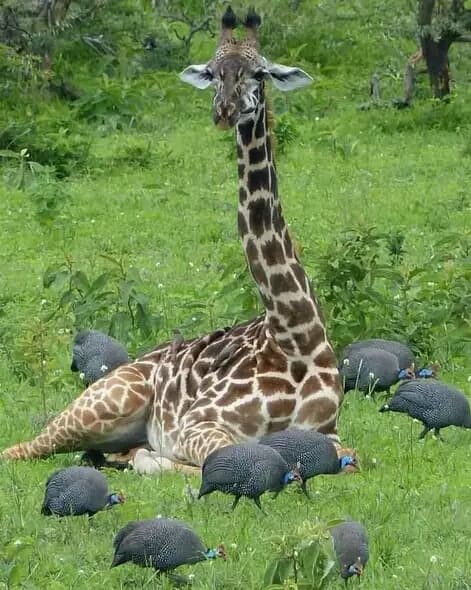
Arusha
Gateway to Tanzania's Greatest Safari Adventures
Arusha sits at 4,600 feet above sea level, close enough to Mount Meru that you can see its peak from downtown. This isn't just another African city — it's the launching pad for some of the world's most incredible wildlife encounters. The Serengeti lies two hours west. Ngorongoro Crater waits 90 minutes south. And here's what most people don't realize: Arusha itself deserves more than just a quick overnight between safaris. The city pulses with Maasai traders selling beadwork on every corner, while coffee farms sprawl across the volcanic slopes just outside town. You'll find proper restaurants serving nyama choma alongside Italian spots that would make Rome jealous. But let's be honest — you're probably here for the animals, and that's exactly why Arusha works so well as your base camp.
Best Months
JAN · FEB · JUN · JUL · AUG · SEP · OCT
~27°C · high crowds
Culture & Context
MAASAI MEETS MODERN AFRICA
Arusha sits at 1,400 meters on the eastern edge of the Great Rift Valley, in the shadow of Mount Meru. The city has around 617,000 people and over 120 ethnic groups contributing to daily life. It earned the nickname "Geneva of Africa" for its role as the headquarters of the East African Community and as the site of the 1967 Arusha Declaration, a defining moment in Tanzania's post-independence story.
Before German colonization in the late 19th century, the area was Maasai territory, and Maasai influence is still visible everywhere, from the beadwork in markets to the warriors you'll see on the streets in full traditional dress. The local music scene runs on Bongo Flava, a Tanzanian hip-hop genre that blends Swahili lyrics with Afrobeat and R&B rhythms. Here's the thing most visitors miss: Arusha is not just a transit stop.
It has its own personality. Coffee culture is real here. The surrounding hillsides grow some of Tanzania's finest Arabica beans, mostly farmed by Chagga and Meru communities, and you can visit working plantations just outside the city center.
CNN Travel named Arusha one of the Top 20 Places to Visit in 2026, making it one of only two African destinations on that list. The city is also preparing to co-host AFCON 2027, and a 30,000-seat stadium named after President Samia Suluhu Hassan is nearly complete. Things are changing fast here.
Local Customs
RESPECT ELDERS, BARGAIN MARKETS
Greetings are taken seriously here. Never jump straight into a question or transaction without exchanging pleasantries first. A quick 'Habari?
' (How are you?) and a genuine pause for the response goes a long way. Tanzanians are patient about this, and you should be too..
When greeting an elder, say 'Shikamoo' (roughly meaning 'I hold your feet' as a sign of deep respect). The response is 'Marahaba.' Using this with older market vendors or guides will genuinely surprise and delight them..
Dress modestly when you're outside tourist lodges and restaurants. Lightweight, long pants and covered shoulders are the standard, especially in local neighborhoods and markets. This matters more in Zanzibar, but it applies in Arusha too..
Always ask permission before photographing people, especially Maasai. Many Maasai charge for photos and that's completely fair. Don't try to be sneaky about it..
Bargaining is expected at markets like the Maasai Market and curio stalls. Start at 30–50% of the asking price and work from there. But don't bargain in restaurants or for official park fees.
Those prices are fixed.. Public displays of affection are frowned upon, for any couple. Keep it low-key in public spaces..
The white-skinned visitor term 'mzungu' (said to you on the street) is not an insult. It's just how foreign visitors are referred to casually. Respond with a smile..
Bongo Flava music is everywhere. Don't be surprised if your dala dala is playing it at full volume. Lean into it.
Safety
URBAN CAUTION REQUIRED
Arusha scores around 52/100 on safety perception rankings in 2026, placing it in the middle of the global pack. Safari zones operate safely and professionally. The city itself requires normal urban awareness.
Petty theft, pickpocketing, and bag snatching happen at crowded places like the bus station, the Central Market, and busy road crossings. Don't walk alone at night, especially in the CBD or poorly lit areas. Use hotel-arranged taxis or negotiate with a driver before getting in, not random street hails.
The Australian government specifically flags armed robberies and carjackings as occurring in and around Arusha, so keep doors locked in vehicles and be alert at night. The U.S.
State Department issued a Level 3 advisory for Tanzania after post-election protests in late October 2025. Safari circuits were unaffected. Monitor your government's current advisory before you travel.
On health: malaria risk is real in Tanzania. Take antimalarial medication, use repellent, and sleep in screened or air-conditioned rooms. Get vaccinated for hepatitis A, typhoid, and yellow fever (mandatory if arriving from an endemic country).
Healthcare facilities in Arusha are limited. Get comprehensive travel insurance that includes medical evacuation before you fly. LGBTQ+ travelers face significant legal risk in Tanzania.
Homosexuality is illegal and enforcement occurs. Exercise extreme caution and discretion.
Getting Around
TAXIS & DALA DALAS
Arusha is served by two airports. Kilimanjaro International Airport (JRO), about 50km east of the city, handles international and major domestic routes. KLM via Amsterdam, Qatar via Doha, Turkish via Istanbul, and Ethiopian via Addis Ababa all fly here.
A taxi from JRO to central Arusha runs $40–62 USD. Pre-booked transfers through your hotel or safari operator typically cost $31–51 USD. The smaller Arusha Airport (ARK) handles domestic-only flights.
From Zanzibar, daily flights to JRO take about an hour and cost roughly $102–204 USD. Overland from Nairobi by bus is possible (5–6 hours plus a border crossing) but flying is faster and less stressful. In the city, dala dalas (shared minibuses) are the cheapest option at under $0.
50 USD per trip. But they're crowded, routes are confusing without Swahili, and they're not the most comfortable experience. Bodabodas (motorcycle taxis) are fast for short trips.
Agree on the price before you get on and ask for a helmet. For anything important, negotiate a taxi in advance. Bolt works in Arusha with limited availability.
Uber is essentially non-functional here. Once on safari, your operator's 4x4 Land Cruiser handles everything. You won't arrange your own transport between parks.
Useful Phrases
Money-Saving Tips
- 1.Safari companies quote prices in USD but accept Tanzanian shillings at better exchange rates
- 2.ATMs in Arusha often run out of cash during peak season - withdraw money before heading to remote areas
- 3.Bargaining is expected at markets but not in restaurants or hotels with posted prices
- 4.Tipping guides 10-15% of your total safari cost is standard - bring small US bills
- 5.Many places add 18% VAT to bills - check if it's already included before paying
- 6.Credit cards work at upscale hotels but carry cash for everything else
Travel Tips
- •Book safari companies directly in Arusha rather than online to negotiate better prices
- •Pack warm clothes - nights get cold at 4,600 feet elevation even during hot days
- •Yellow fever vaccination is required if arriving from infected areas
- •Malaria prophylaxis is recommended despite Arusha's higher altitude
- •Download offline maps before heading to national parks - cell coverage disappears quickly
- •Bring a good flashlight - power cuts happen regularly throughout the city