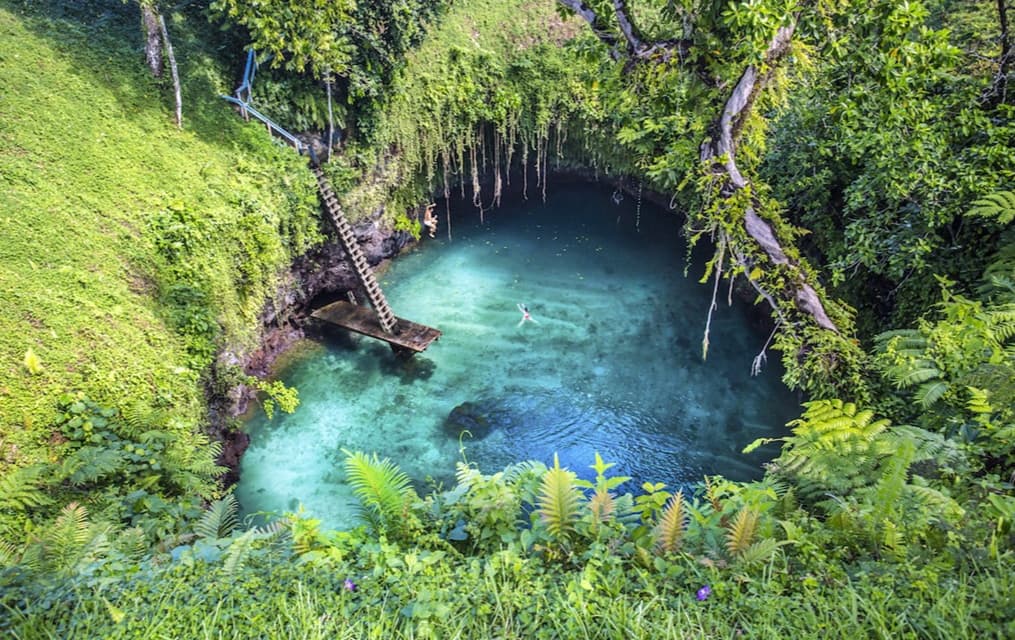
Samoa (Upolu)
Capital island blending modern amenities with traditional Polynesian charm
Upolu hits differently than other Pacific islands. Sure, you'll find those postcard beaches and crystal-clear lagoons. But this is also where modern Samoa lives and breathes — Apia's markets buzz with local life, buses painted in wild colors barrel down coastal roads, and Sunday church services fill the air with harmonious singing that'll give you goosebumps.
The capital island balances tradition with convenience better than most places in the Pacific. You can snorkel with sea turtles at Lalomanu in the morning, grab a proper flat white in Apia by afternoon, and watch fire dancing at a cultural village by sunset. The infrastructure actually works here — decent roads, reliable power, and Wi-Fi that won't make you want to throw your phone into the ocean.
Look, Upolu isn't trying to be the Maldives or Bora Bora. It's unapologetically Samoan, which means family comes first, Sunday is sacred, and hospitality runs deeper than the ocean trenches surrounding this volcanic island.
Best Months
MAY – OCT
~28°C · high crowds
Culture & Context
FA'A SAMOA GOVERNS ALL
Samoa runs on Fa'a Samoa — the Samoan Way. It's not a tourist slogan. It's a real operating system that governs everything from how villages make decisions (chiefs, called matai, hold real authority) to how strangers are treated (like extended family).
The country is deeply Christian, and that shapes the weekly rhythm hard. Sunday is sacred. Shops close.
Many restaurants shut. Even the resort pool area goes quiet. You won't starve, but plan around it.
Family — 'aiga — is the core unit of everything. Decisions are communal. Generosity is expected and returned.
If someone offers you food, accept it. Turning it down is awkward at best, rude at worst. The umu (earth oven feast) is the Sunday centerpiece of Samoan life, and getting invited to one in a local village is worth more than any paid tour.
Robert Louis Stevenson lived his final years here, loved the islands, and is buried on Mount Vaea above Apia. Samoans called him Tusitala — teller of tales. His former home, Vailima, is now a museum and worth the visit, especially for the gardens.
Local Customs
SA CURFEW & RESPECT
The Sa (evening prayer curfew) happens daily in villages, usually between 6pm and 7pm. Stop what you're doing, stay quiet, don't walk through the village during this 10-20 minute period. It's not optional.
Locals take it seriously and so should you.. Remove your shoes before entering any home or traditional meeting house (fale). This applies even in some more casual settings — when in doubt, look at the doorstep and follow what everyone else is doing..
Cover your knees and shoulders when walking through villages. Swimwear is fine at the beach. But stroll into a village in board shorts or a bikini top and you'll get stares and possibly a quiet (or not-so-quiet) word from a local..
Sunday is genuinely sacred. Most shops, restaurants, and attractions either close or run reduced hours. Plan provisions the day before.
The upside: Sunday to'ona'i umu feasts at local churches and community halls are some of the best and cheapest meals you'll have in Samoa.. Small entry fees (ST$5-20 per person) are collected at most beaches, waterfalls, and natural sites by the local village that owns the customary land. Bring small notes.
It supports the community directly and it's entirely normal.. Don't stand when elders are sitting — it's considered disrespectful. When sitting, avoid pointing your feet at others.
If you need to cover up, a lavalava (sarong) works perfectly and you can buy one at the Savalalo Flea Market in Apia for a few tala.. Don't take photos of locals without asking first. Samoans are warm and usually happy to oblige, but the ask matters..
Stray dogs are common in rural areas and some suburban areas of Apia. Don't approach them. Dog attacks on people and at beaches do happen — Australian government travel advice specifically flags this..
The legal drinking age is 21. Samoa is serious about this.. Same-sex relationships are not legally recognized and consensual same-sex relations remain illegal under Samoan law.
LGBTQ+ travelers should be aware of this conservative legal and social context.
Safety
OCEAN & INSECTS MAIN RISKS
Samoa is genuinely one of the safer places you can travel in the Pacific. Violent crime against tourists is rare. Fa'a Samoa, the communal culture, means locals tend to watch out for visitors in a real, practical way.
That said, a few things will actually get you in trouble. Ocean currents are the biggest hazard. Beaches are unpatrolled, rips are strong, and people drown here at otherwise beautiful spots.
Ask locals or dive shop staff about specific conditions before getting in the water — they'll tell you straight. Don't swim after dark. Stray dogs are common in rural areas and on some beaches.
Don't approach them. Petty theft happens at busy beaches and Apia's market crowds — don't leave anything unattended on the sand, even briefly. Outside Apia, roads narrow, pothole, and flood without warning.
A 4WD is genuinely recommended on secondary roads, not just marketing fluff. The Savai'i ferry is cheap and scenic but take note: the Canadian government specifically flags overloading and poor maintenance on some vessels — if it looks dodgy, don't board. Medical facilities are limited.
TTM Hospital in Motootua, Apia (+685 21212), handles emergencies on Upolu. Serious cases get evacuated to New Zealand or Australia. Get travel insurance that explicitly covers medical evacuation — this is not optional here.
Emergency number is 911. Dengue fever outbreaks occur (Samoa's Ministry of Health has declared outbreaks before). Mosquito repellent is essential, especially during the wet season (November-April).
Drink bottled water. LGBT+ travelers: same-sex relations are illegal under Samoan law. Be aware and exercise discretion.
Getting Around
COLORFUL BUS CHAOS CHARM
Getting to Upolu: Faleolo International Airport sits 35km west of Apia. Round-trip flights from major hubs run $800-1,500 USD from most Western cities. Taxi from the airport to Apia costs around ST$60-80 — agree on the price before you get in.
An airport bus also runs but stops at 5pm and has no fixed schedule. Getting around Upolu: The brightly painted 'aiga buses are the cheapest way to move around — ST$0.50 to ST$12 depending on distance.
Wave one down from the roadside, check the destination painted on the front, and pull the cord when you're close to where you want to be. They don't run on tight schedules. They are, however, genuinely enjoyable.
Taxis in Apia charge ST$3-6/km. Always agree on the fare before starting. Rental cars run ST$90-220/day and you'll need a ST$21 local temporary driving permit (available from rental companies, Samoa Post, or the Land Transport Authority in Apia).
You must present your home country's full license to get one. Samoa drives on the left. Road safety enforcement is minimal outside Apia — drive accordingly.
For the To Sua Ocean Trench, Lalomanu, and the south coast, a rental car or scooter (ST$40-95/day) makes the most sense. Buses exist but run infrequently to tourist sites. Getting to Savai'i: Ferry from Mulifanua wharf on Upolu's west coast to Salelologa on Savai'i.
Takes 60-90 minutes. Fares are ST$12 adult, ST$6 child. First boat around 8am.
If you're bringing a car, pre-book at Shipping House in Apia or online — walk-on passengers can queue on the day.
Useful Phrases
Money-Saving Tips
- 1.Bring cash - many local businesses don't accept cards, and ATMs in rural areas can be unreliable
- 2.Bargain at the markets but not aggressively - Samoans appreciate respectful negotiation
- 3.Sunday bus services are limited, so plan accordingly or arrange transport in advance
- 4.Beach entry fees are common (5-20 tala) but usually include basic facilities
- 5.Tipping isn't expected but small amounts are appreciated at restaurants and for tour guides
- 6.Car rental insurance is essential - roads can be challenging and accidents happen
- 7.Buy groceries at local markets rather than resort shops to save significantly on snacks and drinks
Travel Tips
- •Pack reef-safe sunscreen - many beaches have coral protection requirements
- •Bring modest clothing for church visits and cultural sites - shoulders and knees should be covered
- •Download offline maps - cell coverage can be patchy outside Apia
- •Learn basic Samoan greetings like 'Talofa' - locals appreciate the effort
- •Respect Sunday as a day of rest - most businesses close and beaches may be off-limits
- •Pack insect repellent for evening activities - mosquitoes can be persistent
- •Bring waterproof bags for boat trips and water activities
- •Exchange money at banks rather than hotels for better rates
Frequently Asked Questions
Explore Samoa (Upolu)
BUILD YOUR
SAMOA (UPOLU) PLAN
Insider picks, smart timing, and a plan ready when you are.
Start Planning