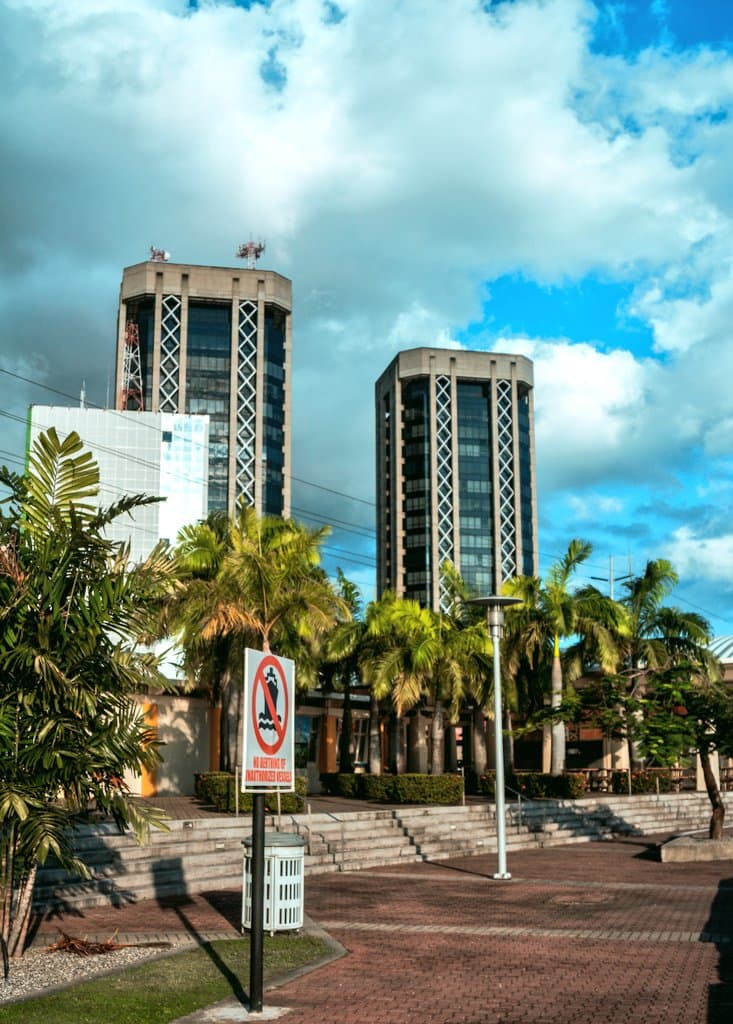
Port of Spain
Caribbean Capital of Carnival and Calypso Culture
Port of Spain hits different. This isn't your typical Caribbean postcard destination — it's Trinidad's pulsing capital where steel drums echo through colonial streets and curry doubles fuel late-night lime sessions. The city that birthed Carnival and calypso music still throws the world's most epic street party every February. But beyond the sequins and soca, you'll find Indian roti shops next to Lebanese bakeries, British colonial architecture housing modern art galleries, and a nightlife scene that makes Miami look sleepy. Look, Port of Spain can be gritty and chaotic. The traffic is legendary, and some neighborhoods require street smarts. But that raw energy is exactly what makes it magnetic.
Best Months
JAN · FEB · MAR · APR · MAY · DEC
~32°C · high crowds
Culture & Context
STEEL DRUMS, SOCA SOUL
Port of Spain is the capital of Trinidad and Tobago — a twin-island nation 11km off the coast of Venezuela, and very much its own world within the Caribbean. The culture here is genuinely unlike anywhere else: a layered mix of African, Indian, Spanish, French, British, Chinese, and indigenous Amerindian heritage, all of which shows up in the food, the music, the language, and the festivals.
Trinidad invented the steel pan in the 1930s — hammering oil drums into melodic instruments was born from necessity and became a national art form. Calypso and soca originated here. The country hosts one of the great pre-Lenten carnivals on the planet, second in scale only to Rio but arguably more intimate and participatory.
English is the official language, but Trinidadian Creole (Trinibagianese) is what you'll actually hear — a "sing-song" dialect shaped by French, Spanish, West African languages, Bhojpuri, and Hindi. It's understandable to English speakers but takes an ear to follow at speed.
The economy runs on oil and natural gas rather than tourism, which means Port of Spain feels more like a real working city than a tourist resort — both its strength and its challenge. The country sits on a transshipment corridor for South American cocaine heading north, which has fueled the gang violence that led to the March 2026 State of Emergency. That reality coexists, somewhat awkwardly, with a population that is genuinely warm, creative, and intensely proud of their culture. Most visitors who stay aware and take basic precautions have a rewarding trip.
Local Customs
GREET ON BOARDING ALWAYS
Greet people when you board a maxi taxi or enter a shop — 'Good morning' or 'Good afternoon' is expected, not optional. Skipping this is considered rude.. Camouflage clothing is illegal to wear in public in Trinidad and Tobago.
Don't pack it.. Liming — casual hanging out with no particular agenda — is the social backbone of Trini life. Don't rush a lime..
When riding a route taxi, say 'nex corner drive' to signal your stop as you approach.. Tipping is appreciated but not mandatory. Many restaurants include a service charge — check the bill before adding more..
Traffic drives on the LEFT. Roads can be aggressive — locals describe driving as 'an adventure park ride'.. Carry small denominations of TTD cash at all times.
Maxi taxis are cash only and drivers often have no change for large bills.. Don't flash expensive jewelry, cameras, or cash in public — particularly in crowded downtown areas.. US dollars are widely accepted at hotels, restaurants, and larger shops, but smaller vendors prefer TTD..
LGBTQ+ travelers should be aware that same-sex sexual activity remains criminalized under colonial-era laws. Port of Spain has a discreet scene but open displays of affection carry genuine social risk outside of specific venues.
Safety
GANG VIOLENCE, TOURIST AWARE
**Current Alert (March 2026):** The Government of Trinidad and Tobago declared a nationwide State of Emergency on March 2–3, 2026 due to a spike in violent criminal activity. Security forces have expanded powers to arrest, search, and enter properties without warrants. There are currently no curfews or restrictions on tourists, and the government has stated tourism continues unhindered — but expect a stronger security presence in Port of Spain.
**Advisory Levels:** US State Dept: Level 3 (Reconsider Travel). Canada: Level 2–3 (Level 3 for parts of Port of Spain). UK: Exercise a high degree of caution.
**Safe neighborhoods for tourists:** Woodbrook, St. Clair, Newtown, Cascade — comfortable for daytime exploring with restaurants, markets, and cultural landmarks.
**Avoid entirely:** Laventille, Morvant (hillside communities east of Port of Spain — no practical tourist reason to go). Downtown Port of Spain after dark, especially south of Independence Square and east of Charlotte Street.
**Transport:** Only use registered private taxis (identified by H-prefix license plates). US government employees are prohibited from using public transport for safety reasons. Apps like Drop and Reach offer local on-demand rides. Pre-agree all taxi fares — taxis are unmetered. Licensed airport taxis at Piarco charge TTD 150–200 to central Port of Spain (displayed on rate boards in arrivals). Avoid anyone who approaches aggressively outside.
**General:** Most violent crime is gang-related and concentrated in specific communities — violent attacks on tourists are rare but do occur. Petty theft and pickpocketing are the main tourist risk, particularly in crowded areas and at Carnival. Don't walk alone after dark. Use ATMs only in well-lit, populated areas. Drink bottled water (aging pipes make tap water unreliable). Public hospital emergency care is free; St. Clair Medical Centre is the fastest private option.
Getting Around
MAXI TAXIS & CASH
**From the Airport:** Piarco International Airport (IATA: POS) is ~26km east of the city — allow 40–60 minutes depending on traffic. Licensed PTSC airport taxis operate on fixed fares displayed on rate boards in arrivals (typically TTD 150–200 to central Port of Spain). Avoid the informal 'pirate taxi' drivers who approach aggressively outside. Alternatively, take the public bus from the airport curbside to City Gate, the main bus terminal — considerably cheaper but slower.
**Within Port of Spain:** - **PTSC Buses** (blue-and-white / red-and-white express): Operate from City Gate terminal at South Quay. Fares TT$2–12 one way. Tickets must be bought at the terminal before boarding — you cannot pay on the bus. Service 4:30am to ~9pm, less frequent on weekends. - **Maxi Taxis** (color-coded minivans): The most common local transport. Privately owned, fixed routes, fares paid in cash to the driver. Yellow-band: western routes (Diego Martin, Chaguaramas). Red-band: eastern routes to Sangre Grande. Green-band: central Trinidad/Chaguanas. Hub at St Vincent St & South Quay for yellow-band; City Gate for others. Fares TT$3–10. After 9pm, service becomes unreliable. - **Private Taxis:** Identified by H-prefix license plates. Fares are unmetered — always agree the price before getting in. Available at taxi stands at the airport, cruise port, hotels, and city streets. - **Ride Apps:** Drop and Reach are local on-demand taxi apps operating in Port of Spain. Uber has signaled plans to enter the market. - **Rush Hours to Avoid:** 7–9am and 4–6pm. Port of Spain traffic is notoriously bad — maxi taxis and buses can use the Priority Bus Route, which car taxis cannot. - **Water Taxi:** The Port of Spain–San Fernando water taxi (50 min, heavily subsidized) is a practical and scenic alternative to the clogged road corridor.
Useful Phrases
Money-Saving Tips
- 1.ATMs are everywhere downtown, but bring cash for street food and taxis — most vendors don't take cards
- 2.Doubles cost 3-5 TT dollars from street vendors, but tourist spots charge 15+ TT dollars for the same thing
- 3.Shared taxis (maxi taxis) cost 3-5 TT dollars per ride vs 25-40 TT dollars for private taxis
- 4.Local rum costs 40-60 TT dollars per bottle at supermarkets vs 200+ TT dollars at hotel bars
- 5.Carnival costumes range from 800-3000 TT dollars depending on the band — book early for better prices
- 6.Water taxis to other parts of Trinidad cost 10-20 TT dollars vs 100+ TT dollars for private boat tours
- 7.Local restaurants charge 30-50 TT dollars for full meals vs 150+ TT dollars at tourist-focused spots
Travel Tips
- •Download the ttconnect app for real-time updates on water taxi schedules and delays
- •Carry small bills — many vendors can't break 100 TT dollar notes
- •Learn basic soca and calypso artists' names — locals love talking music and will give better recommendations
- •Pack light, breathable clothes and comfortable walking shoes — cobblestone streets are rough on feet
- •Bring reef-safe sunscreen — the Caribbean sun is intense even on cloudy days
- •Keep copies of important documents — petty theft happens, especially during Carnival
- •Download offline maps — cell service can be spotty in some neighborhoods
- •Learn the difference between doubles, bake and shark, and roti — locals appreciate food knowledge
- •Bring a portable fan or cooling towel — air conditioning isn't universal
- •Pack a light rain jacket for sudden tropical downpours, especially May through November
Frequently Asked Questions
Explore Port of Spain
BUILD YOUR
PORT OF SPAIN PLAN
Insider picks, smart timing, and a plan ready when you are.
Start Planning