Trincomalee
Ancient port with pristine beaches and sacred temples
Trincomalee sits on Sri Lanka's northeast coast like a secret that's been hiding in plain sight for 2,000 years. This ancient port city wraps around one of the world's finest natural harbors, where Portuguese, Dutch, and British colonizers once fought for control. Today, it's a place where Hindu pilgrims climb sacred hills while surfers catch waves on beaches that most tourists never see. The town moves at its own pace — slower than Colombo, more authentic than the southern coast. You'll find Tamil fishermen mending nets at dawn, while Buddhist monks walk past crumbling colonial buildings. Trincomalee doesn't try to impress anyone, which is exactly why it does.
Best Months
APR – SEP
~34°C · moderate crowds
Culture & Context
TAMIL HINDU HEART
Trincomalee sits at the intersection of three communities — Tamil, Sinhala, and Muslim — and that mix shows up everywhere, from the food stalls to the temples to the fishing boats at dawn. Tamil is the dominant language on the streets and in the markets; if you're coming from the south coast of Sri Lanka, the cultural shift is immediate and noticeable. The city has Hindu kovils on almost every corner, and the daily rhythms of prayer, fishing, and market life carry on without much regard for tourist schedules.
Religion is genuinely central here, not performative. The Koneswaram Temple on Swami Rock is one of the holiest Shiva temples in Sri Lanka, and pilgrims arrive year-round. Fort Frederick — still an active military base — tells you a lot about Trincomalee's past as a prized colonial port fought over by the Portuguese, Dutch, and British.
The war cemetery near Uppuveli Beach, with its 303 Commonwealth graves from WWII, adds a sobering layer to what might otherwise feel like a pure beach destination. Tamil culture dominates social life here in a way that sets it apart from southern Sri Lanka — expect a slower, more contemplative pace, strong family-oriented communities, and a genuine curiosity about visitors who show respect for local ways.
Local Customs
TEMPLE PROTOCOL MATTERS
Dress conservatively when visiting temples — shoulders and knees must be covered for both men and women. Women are specifically required to cover up at the Shri Pathrakali Amman Kovil and Koneswaram Temple. Carry a light scarf or sarong as a backup..
Remove your footwear before entering any Hindu temple or Buddhist shrine. There are usually shoe racks or a designated area at the entrance.. Use your right hand to give and receive items — money, food, gifts.
The left hand is considered unclean in both Hindu and Muslim traditions that are strong here.. Do not point at people or religious statues with your index finger. Use an open hand or a nod of the head instead..
When sitting, avoid pointing the soles of your feet toward people or toward religious objects — particularly important inside temples and kovils.. At temple festivals, avoid interrupting processions or pushing forward with your camera. Watch and photograph respectfully from the sidelines.
Ask before photographing worshippers up close.. Bargaining is normal in markets and with tuk-tuk drivers, but always agree on the fare before you get in. Apps like PickMe and Uber help you avoid price arguments entirely..
Tuk-tuk drivers may approach with offers of 'special' tours or gem shops — be politely firm and decline. Scams involving commission-based shops are common tourist traps.. Alcohol is available at beach restaurants and some hotels but is not widely sold in local shops.
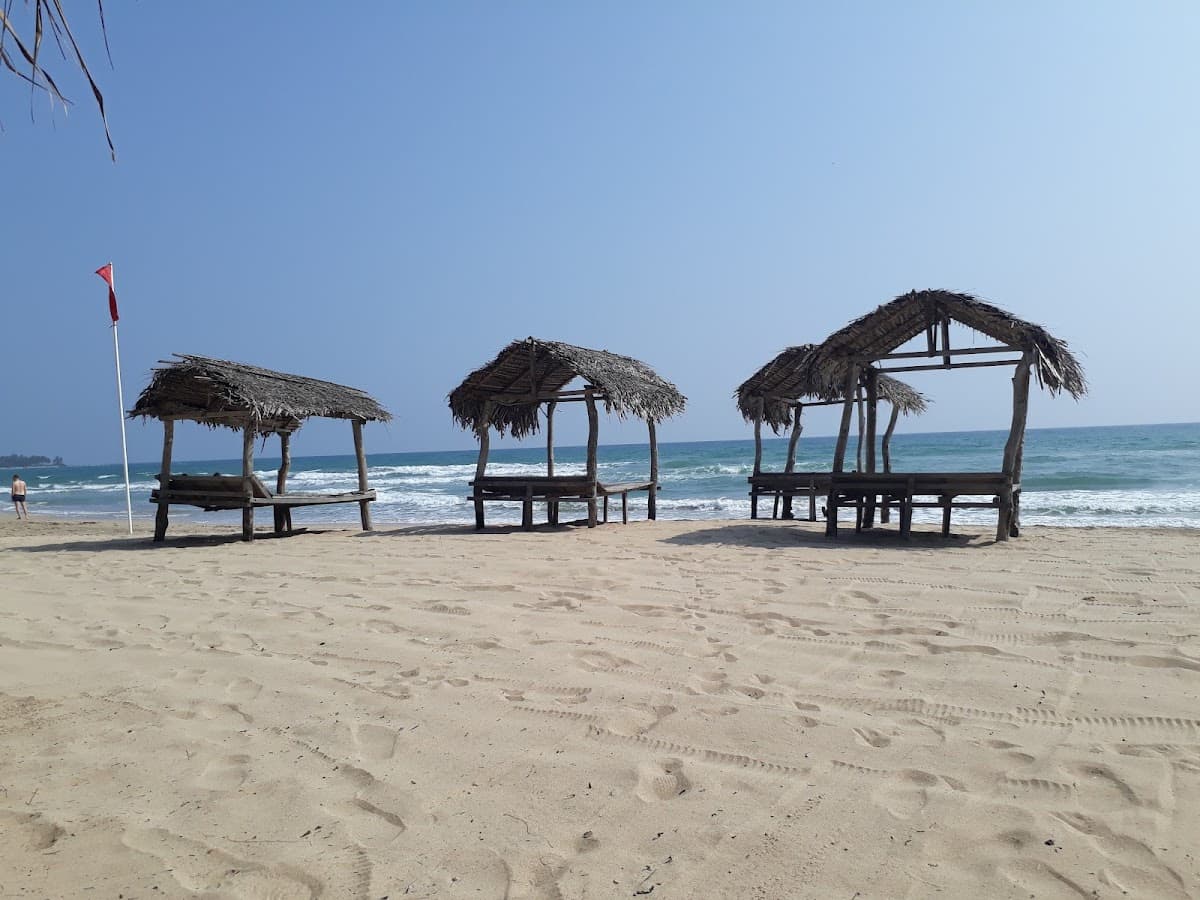
Don't expect a party scene — Trincomalee is not that kind of town.. The beach can have dangerous currents on windy days. Pay attention to red flag warnings at Uppuveli Beach and do not swim when they are flying.
Safety
WATCH YOUR WITS
Trincomalee is generally safe for tourists — violent crime is low and locals are genuinely welcoming. That said, a few things are worth knowing. Tuk-tuk drivers regularly overcharge foreigners, even when using meter apps.
Use PickMe or Uber whenever possible to lock in a price upfront. Watch out for drivers offering 'special' tours to gem shops or fixers appearing out of nowhere at attractions — these are commission setups. Keep your passport on you at police and military checkpoints; Fort Frederick is still an active army base and they take ID seriously.
Don't photograph military installations, equipment, or personnel without explicit permission — it's illegal and enforced. On the water, only book whale watching and diving tours with reputable licensed operators. Safety inspections for water activities are inconsistent in Sri Lanka.
Note that the only working decompression chamber for diving injuries on the island is at the Sri Lanka Navy Base in Trincomalee — good to know if you're doing deep dives. The monsoon season (October–January on the east coast) brings rough seas, red flag warnings, and murky water — swimming can be dangerous. Respect red flags on the beach absolutely.
Mosquitoes carry dengue in Sri Lanka — use DEET repellent and sleep under a net or in air-conditioned rooms. Don't drink tap water.
Useful Phrases
Money-Saving Tips
- 1.Negotiate three-wheeler fares before starting your journey - tourist rates can be 3x local prices
- 2.Eat at local Tamil restaurants near the bus station - meals cost 200-400 rupees vs 1,500+ at tourist spots
- 3.Buy fresh coconuts directly from vendors for 100 rupees instead of 300 rupees at beach resorts
- 4.Book Pigeon Island snorkeling trips through guesthouses rather than beach operators to save 1,000+ rupees
- 5.Stay in Uppuveli instead of Nilaveli for similar beaches at half the accommodation cost
- 6.Visit temples early morning to avoid donation pressure from unofficial 'guides'
- 7.Stock up on alcohol at wine stores in town - restaurant markup is 200-300%
- 8.Use local buses for 20-50 rupees instead of three-wheelers for longer distances within the area
Travel Tips
- •Bring reef-safe sunscreen - coral protection is becoming more important here
- •Pack a sarong for temple visits - many require covered shoulders and legs
- •Download offline maps - mobile coverage can be spotty on remote beaches
- •Learn basic Tamil phrases - English isn't as common as in southern Sri Lanka
- •Carry small bills - vendors and three-wheeler drivers rarely have change for large notes
- •Book accommodation in advance during April-September peak season
- •Respect local customs at Hindu temples - remove shoes and hats before entering
- •Keep copies of your passport - some areas still have military checkpoints from the civil war era