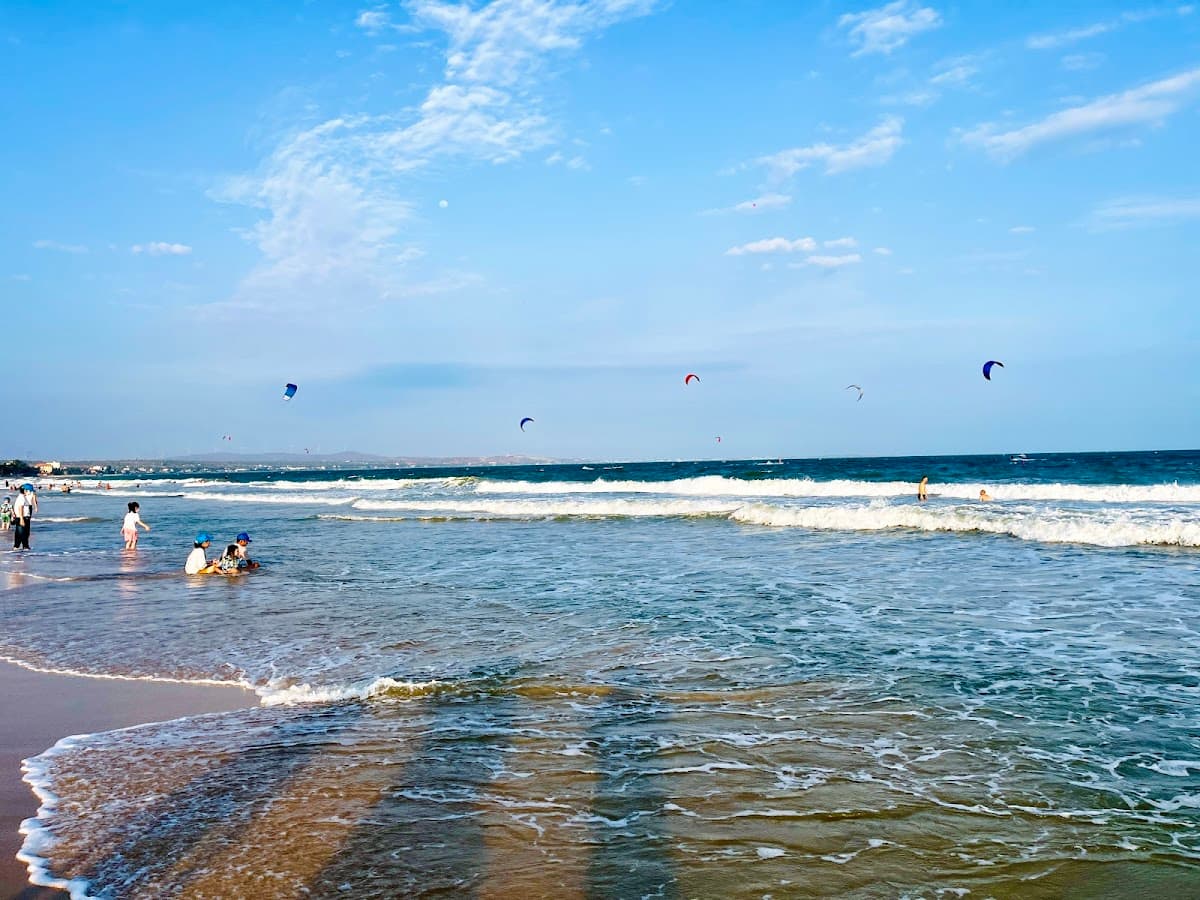
Mũi Né
Vietnam's desert meets ocean adventure playground
Look, Mũi Né isn't your typical Vietnamese beach town. This stretch of coast about four hours east of Ho Chi Minh City serves up something completely different — red sand dunes that look like they belong in Morocco, world-class kitesurfing conditions, and a fishing village that still feels authentic despite the growing tourism. The contrast hits you immediately: one minute you're walking through the Sahara-like White Sand Dunes, the next you're watching colorful fishing boats bob in the South China Sea. It's this weird, wonderful collision of desert and ocean that makes Mũi Né special.
Best Months
JAN · FEB · MAR · APR · NOV · DEC
~29°C · moderate crowds
Culture & Context
ECLIPSE-BORN KITESURFING HUB
Mũi Né started as a quiet fishing village and only got put on the tourist map in 1995 when a solar eclipse drew astronomers and backpackers to this stretch of coast. Word spread. Resorts followed.
Now it's one of Vietnam's most recognized beach destinations, but here's the thing: what most visitors call "Mũi Né" is actually Ham Tien, a separate ward sandwiched between the genuine Mũi Né fishing village to the east and Phan Thiet city to the west. The actual fishing village is still functioning, still colorful, still very much itself. The tourist strip along Nguyễn Đình Chiểu Street is Ham Tien.
Online hotels list both names interchangeably and that causes a lot of booking confusion. The area sits in Bình Thuận Province (now technically part of expanded Lâm Đồng Province after a 2025 administrative reshuffle) and has one of the only microdesert climates in Southeast Asia, with consistent winds making it a serious kitesurfing and windsurfing hub. Ancient Cham heritage runs through the region too.
The Po Sah Inu towers on Ong Hoang Hill are built from red brick dating to the 8th century, and nearby Ninh Thuận Province hosts the Kate Festival, the biggest Cham cultural celebration of the year. The local economy still revolves around fishing and fish sauce production. Mũi Né's pungent, deeply savory nước mắm is considered among the best in Vietnam.
Local Customs
EARLY FISHING HARBOR VISITS
Take shoes off before entering temples, pagodas, and most local homes. Look for a pile of shoes at the door — that's your signal.. Use 'Em ơi' (em oy) to get a server's attention in restaurants.
Waving or snapping fingers is considered rude.. At the fishing harbor, show up before 10am. Fishermen start packing up mid-morning and the best action — sorting crabs, stingrays, scallops — happens right after boats come in at dawn..
When drinking with locals, wait for the group toast. The phrase '1, 2, 3, dô!' means everyone drinks together.
Jumping ahead is bad form.. Bargaining is expected at markets and from sandboard rental kids at the red dunes. Always agree on a price before picking anything up.
Smile while doing it — it's genuinely friendly, not adversarial.. Dress modestly at religious sites. The Po Sah Inu Cham towers require covered shoulders and knees.
Lightweight linen works fine in the heat.. Tipping is not mandatory but appreciated at smaller restaurants and guesthouses. Rounding up to the nearest 10,000 VND is fine..
Don't feed the monkeys at Ta Cu Mountain. They're bold, they bite, and everyone who ignored this advice regretted it.
Safety
FAKE POLICE SCAMS
Mũi Né is broadly safe, but a few specific things are worth knowing before you arrive. The motorbike snatch-and-grab is the most common crime. Bags, phones, and cameras worn loosely on the street are targets.
Keep them secured on your body or inside a bag, particularly in the busy stretches of Nguyễn Đình Chiểu. The bigger, more Mũi Né-specific issue is the fake police shakedown on the roads leading to and from the sand dunes. Officers (or people posing as officers) pull over tourists on rented motorbikes and demand payment to avoid a fictional fine.
This scam has operated for years. Many experienced travelers skip renting a motorbike specifically because of it, opting for Grab or a booked jeep tour to the dunes instead. The beaches also have a real pollution problem that most blog posts don't mention.
Plastics, bottle caps, discarded nets, and styrofoam wash up across multiple beaches from the southern to central to northern sections of the bay. The popular tourist-strip beaches are cleaner, but venture further and it's genuinely depressing. The sea currents can be rough, especially June through November (peak rainy season is October).
Don't swim alone or at night. The strong, consistent winds that make Mũi Né great for kitesurfing are the same winds that create challenging ocean conditions. Use licensed operators for any water sports, and for dune activities, choose reputable tour companies and bring at least 1-2L of water and proper sun protection.
Vietnam's 4G coverage is good throughout the area, and VPN services (ExpressVPN, NordVPN, Surfshark) are commonly used by travelers since some social media platforms experience occasional restrictions.
Getting Around
GRAB OVER RENTAL BIKES
Getting here from Ho Chi Minh City is easier than it used to be. The Dau Giay–Phan Thiet expressway knocked the drive down to about 2–2.5 hours.
A luxury sleeper bus or limousine van runs $12–18 per person, departing from HCMC between 07:30 and 09:00 and arriving at Ham Tien around 13:00. Buses also run the reverse at 14:00 or 02:00. The train from HCMC departs around 06:30 and takes 5 hours to Phan Thiet station, which sits 2.
5km from the city center. From Phan Thiet station, you still need a taxi to reach the Mũi Né resort strip — budget at least 500,000 VND ($20) for that last leg. From Nha Trang, the bus takes about 5 hours.
There is no direct flight into Mũi Né or Phan Thiet. Once in town, the local bus between Phan Thiet and the Ham Tien strip costs 8,000–11,000 VND, which is essentially free. Renting a scooter runs $5–10/day (a Honda Vision was quoted at 150,000 VND/day recently), but given the police shakedown risk on dune roads, first-timers are genuinely better off using Grab.
For the sand dunes specifically, book a jeep tour — around 800,000 VND per vehicle for up to 7 passengers — and split it with other travelers from your hostel. It covers White Dunes, Red Dunes, Fairy Stream, and the fishing village, and it's far less stressful than navigating the dune roads solo on a rented bike.
Useful Phrases
Money-Saving Tips
- 1.Rent motorbikes from local shops instead of hotels to save 50,000-100,000 VND per day
- 2.Eat at the fishing harbor in early morning for fresh seafood at local prices
- 3.Book accommodation in actual Mũi Né village rather than Ham Tien Beach to cut costs in half
- 4.Buy dragon fruit and other snacks at the local market instead of beachfront shops
- 5.Visit White Sand Dunes independently instead of booking tours to save 200,000 VND per person
- 6.Stay during shoulder months (November, April) for 30-40% lower hotel rates
Travel Tips
- •Bring reef-safe sunscreen — the reflection off sand dunes will burn you twice as fast
- •Pack water shoes for Fairy Stream and rocky beach areas
- •Download offline maps since cell coverage gets spotty near the dunes
- •Book kitesurfing lessons in advance during peak season (December-February)
- •Carry cash — most local restaurants and tour operators don't accept cards
- •Visit sand dunes early morning or late afternoon to avoid scorching midday heat
- •Learn basic Vietnamese numbers for bargaining at markets and with motorbike taxis
- •Bring a waterproof bag for beach days — sand gets into everything