Manaus
Amazon gateway where urban life meets pristine rainforest
Manaus sits like a concrete island in an ocean of green. Two million people call this Amazon metropolis home, making it one of the most unlikely cities on Earth. Here's where cargo ships dock next to pink river dolphins, where you can grab sushi at noon and spot jaguars by sunset. The city sprawls along the Rio Negro, just 18 kilometers from where it meets the Amazon River in the famous Meeting of Waters. Most travelers see Manaus as a jumping-off point for jungle tours. And sure, it's that. But spend a few days here and you'll discover a city that's fascinating in its own right — part frontier town, part industrial hub, part cultural melting pot.
Best Months
JUN – OCT
~35°C · high crowds
Culture & Context
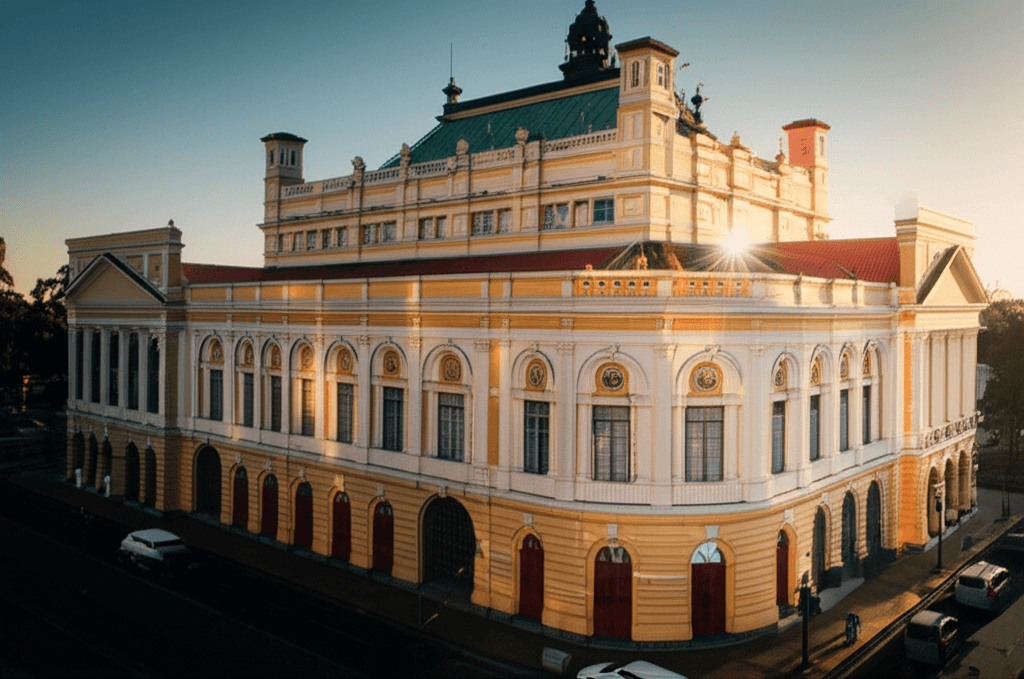
JUNGLE OPERA HOUSE
Manaus is a city that shouldn't exist, and that's part of what makes it so fascinating. Two million people living deep in the Amazon, 1,500 kilometers from the Atlantic Ocean, in a metropolis with an opera house that rubber barons built using Italian marble and Scottish steel imported by ship. The Teatro Amazonas opened in 1896 at the absolute height of the rubber boom, when Manaus was briefly one of the wealthiest cities on earth.
That era collapsed, the jungle crept back in, and the city spent decades recovering. In 1967, Manaus was declared a duty-free zone (Zona Franca), which kick-started its economy again and turned it into a major manufacturing hub. Today it's a city of real contrasts: colonial mansions next to open markets, modern malls a few blocks from stilted riverside communities, and absolute wilderness within a 20-minute drive from downtown.
The culture here is Amazonian first, Brazilian second. Indigenous influences run deep in the food, the language, the festivals. People are warm and will help you even if they can't quite communicate in English.
Men greet with handshakes; women typically exchange cheek kisses. Tipping is not expected, but a 10% service charge is often already on your restaurant bill. And respect for the river is real here.
The Amazon isn't a backdrop for locals. It's a road, a food source, a way of life.
Local Customs
PORTUGUESE WINS HEARTS
Greetings matter. Men shake hands; women exchange a kiss on one cheek with other women and sometimes with men they know well. Don't skip the greeting when entering a room or a small shop..
Don't drink tap water. The local supply isn't reliable for tourists. Stick to bottled water or ask your accommodation whether their water is filtered..
Tipping is not standard or expected. Most restaurants include a 10% service charge (serviço) on the bill, and paying it is optional but common. You can leave R$5/day for hotel housekeeping if you want..
English is limited. Even in tourist areas, staff may speak only basic English or none at all. Download Google Translate with the Portuguese offline pack before you arrive.
People genuinely appreciate any effort to speak Portuguese, even broken attempts.. The heat is not negotiable. Manaus sits in the middle of the Amazon and stays hot and humid year-round, with average temperatures around 27–32°C (80–90°F).
Loose, light clothing is the daily uniform. Plan outdoor activities for the morning.. Avoid displaying phones, cameras, or expensive jewelry in public.
Property crimes targeting tourists are the most common issue in the city.. Mosquito repellent is not optional, especially near water or at dawn and dusk. Bring DEET-based spray.
Yellow fever vaccination is required to enter Brazil, and you need proof.. When visiting jungle areas or river communities, follow your guide's instructions completely. The Amazon is a real wilderness and conditions can shift fast.
Safety
WATCH YOUR BELONGINGS
Manaus is a medium-risk city that rewards prepared travelers and punishes careless ones. The official safety score sits in the lower quarter globally, and petty theft (phones, cameras) is the most common issue tourists face. Violent crime exists but is concentrated in neighborhoods far from the tourist circuit.
Here's the practical breakdown: the area immediately around the Teatro Amazonas and Largo de São Sebastião is heavily policed and fine to walk during the day. Adrianópolis and Ponta Negra feel notably safer. At night, take Uber everywhere, not street taxis.
Unmarked cabs have a documented history of overcharging and worse. Don't walk alone after dark in isolated streets, and never flash your phone or camera unnecessarily. ATMs are best used during daylight hours when guards are present.
The jungle is a separate safety category. Never go into the rainforest without a licensed, experienced guide. Medical access is limited once you're more than a few kilometers out, and conditions change fast.
On the health side: don't drink tap water, use strong DEET repellent especially at dawn and dusk, and get your Yellow Fever vaccination before you travel (proof is checked at the airport). Malaria is a real risk in jungle areas. Hepatitis A, Typhoid, and Yellow Fever vaccinations are all recommended.
Scams to watch for: overpriced jungle tour operators at the port, unofficial guides near the market, and inflated taxi fares from the airport. Book jungle excursions through your hotel or a vetted agency, not from someone who approaches you on the street.
Getting Around
UBER & RIVER BOATS
You arrive at Eduardo Gomes International Airport (airport code: MAO), which has direct connections to São Paulo (Guarulhos), Rio de Janeiro, Brasília, Belém, and international routes to Miami, Bogotá, and Panama City. A direct Gol Airlines route from Miami launched in 2025, which is a game-changer for North American travelers. Once in the city, use Uber.
It works reliably in Manaus, costs R$15–40 for most rides within the main neighborhoods, and is dramatically safer than hailing random taxis. Public buses run throughout the city at R$4.50 per trip, but the US State Department and most safety guides advise against using them at night due to robbery risk.
For getting to the Amazon, the main options are organized day tours departing from the city docks, or multi-day jungle lodge packages that include boat transfers. Budget lodges are 30–50 km out (90-minute boat ride); premium remote lodges travel 80–150+ km and require 3–6 months of advance booking for the dry season (June–November). Parintins (for the Boi Bumbá festival) is reachable by a regional flight from MAO or a 16–18 hour river boat journey.
The river is a legitimate highway here. Long-distance river boats go to Belém in 4–6 days. Check operators Bellturismo and Macamazon for multi-day Amazon river routes.
Useful Phrases
Money-Saving Tips
- 1.Book jungle tours directly with operators at Porto da Ceasa to skip middleman markups — you can save 30-40%
- 2.Eat lunch at local restaurants during the week for R$15-20 fixed-price meals (prato feito)
- 3.Take boats instead of private transfers to jungle lodges — public boats cost R$50 vs R$200+ for private
- 4.Shop at Mercado Municipal for fruits and snacks instead of hotel shops — prices are 3x lower
- 5.Visit during shoulder season (June or October) for 40% cheaper hotels without sacrificing weather
- 6.Use local SIM cards for internet — international roaming in the Amazon costs a fortune
- 7.Book accommodation in Adrianópolis instead of Ponta Negra for similar quality at half the price
Travel Tips
- •Bring cash — many jungle tour operators and local restaurants don't accept cards
- •Pack light, quick-dry clothes and leave cotton at home — humidity is brutal year-round
- •Get yellow fever vaccination at least 10 days before travel — it's required for most jungle areas
- •Download offline maps before heading into the forest — cell service disappears quickly
- •Bring insect repellent with at least 30% DEET — Amazon mosquitoes are relentless
- •Learn basic Portuguese phrases — English is rare outside tourist areas
- •Book jungle tours for at least 3 days to see wildlife — day trips barely scratch the surface
- •Carry copies of your passport — originals can get damaged in humid conditions
- •Pack a waterproof bag for electronics — everything gets wet during rainy season