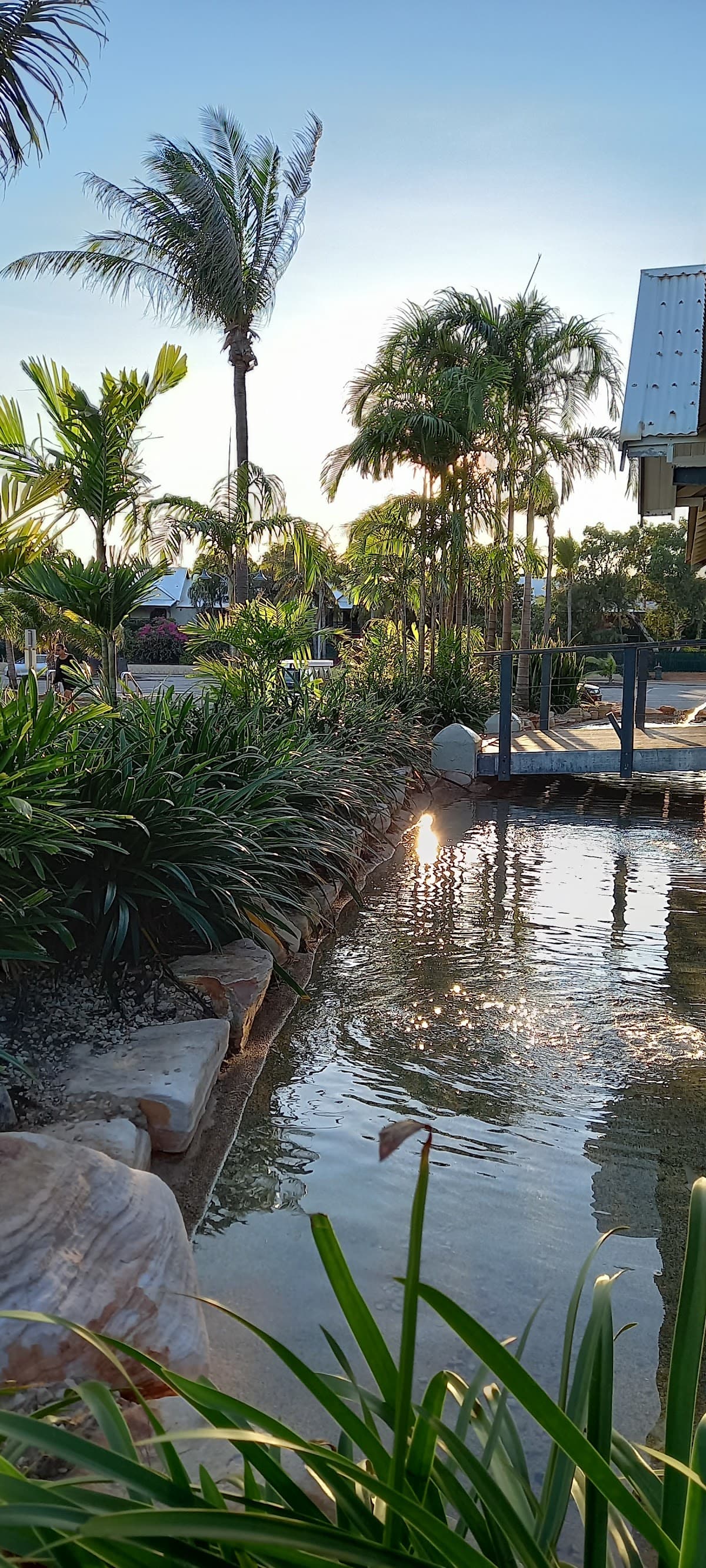
Broome
Outback Meets Ocean in Australia's Pearl Diving Capital
Broome sits at the edge of the world, where red dirt meets impossibly blue water. This former pearling town in Western Australia's Kimberley region feels like nowhere else on earth. You'll find 22-kilometer Cable Beach stretching into infinity, camel trains silhouetted against crimson sunsets, and a fascinating mix of Aboriginal, Asian, and European cultures that shaped this remote outpost. The town's pearling heritage runs deep — you can still see the old lugger boats and hear stories of the dangerous diving days. But Broome isn't stuck in the past. Modern resorts line the coast, excellent restaurants serve fresh barramundi, and the Saturday markets buzz with locals and travelers swapping stories. It's laid-back in the best way possible, where thongs are formal wear and everyone moves at desert time.
Best Months
APR – OCT
~30°C · moderate crowds
Culture & Context
PEARLING MELTING POT
Broome sits on Yawuru country — people have lived here for over 30,000 years before Europeans arrived in the 1830s. The town as it exists today grew out of the late-19th-century pearling industry, which drew workers from Japan, China, Malaysia, the Philippines, and Indonesia. That mix shaped everything: the architecture on Carnarvon Street, the food available around Chinatown, the multicultural festivals that still define the social calendar.
The Shinju Matsuri festival literally grew from three separate cultural celebrations merged into one. Broome's history is not tidy. Racial segregation was common here until the 1970s, and the town's social geography (pearl masters in Old Broome, workers in Chinatown) reflected a rigid ethnic hierarchy.
That's worth knowing when you walk those streets. Today, Broome has a distinct identity sometimes called 'Broome lingo' — a regional dialect influenced by Aboriginal English, Yawuru, and the various Asian languages that shaped the town. The Yawuru language program now runs in four of Broome's five primary schools, which means the language is actually being revitalised rather than just preserved on paper.
The Mabu Yawuru Ngan-ga philosophy — roughly translated as 'healthy spirit' — underpins a lot of how the community talks about itself and its relationship to country. And the pearling industry is still alive: Broome remains Australia's pearling capital, and the farms north of town at Willie Creek continue to operate.
Local Customs
TIDES RULE EVERYTHING
Acknowledge the Yawuru people as the Traditional Owners of the land and sea around Broome. The Yawuru are the Native Title holders and their presence shapes everything from place names to guided tours. Taking a Narlijia Tour with a Yawuru guide is one of the better things you can do here — it's not a box-ticking exercise, it's genuinely interesting..
The pearling industry is not just history — it's still active. Pearl boutiques in Chinatown are legitimate businesses selling South Sea pearls from working farms like Willie Creek. Prices are high, but so is the quality.
Don't walk in expecting a bargain.. Strict biosecurity laws apply when entering Western Australia. Nuts, seeds, fruit, honey, plants, and used camping gear all need to be declared.
Fines for non-declaration now start at AUD $2,664. Just declare everything and the officers will usually hand most of it back.. The dry season transforms the town.
Broome goes from around 16,000 residents in the wet to over 45,000 visitors per month in the dry. Book accommodation months in advance for race days, Shinju Matsuri, and Staircase to the Moon nights — these dates fill up completely.. Tides dictate your day here in ways that don't apply anywhere else.
The tidal variation can exceed 9 metres. Dinosaur footprints at Gantheaume Point are only visible at tides below 1.3 metres.
Driving on Cable Beach north of the rocks requires knowing exactly when the tide turns. Pick up the free Destination Broome map (available at 100+ locations around town) which includes tide and moonrise times.. Sun protection is genuinely non-negotiable.
This is tropical northwest Australia — UV is extreme. Hats, high-SPF sunscreen, and water are not optional, especially between 10am and 3pm.. Never swim in estuaries, creeks, or unpatrolled beaches without checking for crocodile warnings first.
Box jellyfish season runs October through April in northern waters. Cable Beach is patrolled during the dry season only, and only in front of the Surf Life Saving Club.
Safety
CROCS & CURRENTS
Broome is generally safe during the day. The main risks here are environmental, not criminal. Crocodiles are present in coastal waters, estuaries, and waterways around the Kimberley — do not swim, fish, or wade in any body of water without checking for warning signs first.
Box jellyfish season runs October through April in northern waters. On Cable Beach, lifeguards only patrol during the dry season and only in the flagged swimming zone in front of the Surf Life Saving Club. Gantheaume Point and every other beach in Broome has zero lifeguard coverage.
During the wet season, roads flood fast and floodways can become lethal without warning. Never attempt a flooded crossing even in a 4WD. Always carry water, food, spare tyres, and emergency supplies when driving beyond town.
Night-time awareness: petty theft happens, so don't leave valuables visible in vehicles. The usual advice applies — lock things up, be aware of your surroundings after dark, particularly around busy pub areas. Sun exposure is the risk most tourists underestimate.
The UV index here is extreme; burns happen fast, especially on the water or beach. High-SPF sunscreen, a hat, and hydration are genuinely important, not optional extras.
Getting Around
WALK OR RENT
Broome International Airport (BME) sits less than a kilometre from the town centre — you can almost walk it, though taxis and car hire are right there. Direct flights connect from Perth, Darwin, and Sydney. There are no international commercial flights directly into Broome from outside Australia (though Jetstar Asia runs seasonal Singapore routes during the dry season).
Once in town, the TransBroome public bus route 890 links Cable Beach and Town Beach. It launched in August 2025 after a private operator folded, and received further investment in 2026 — it's basic but functional. A monthly pass runs around AUD $65.
BEAM electric scooters are also available around Chinatown. Look, for anything beyond the main precincts you really need a vehicle. A 4WD is strongly recommended if you plan to head north on the Dampier Peninsula, where the Cape Leveque Road runs 220km and some sections remain unsealed despite recent improvements.
Fuel in Broome costs more than in cities — budget AUD $120–$180/month if driving regularly. Taxis operate but can be limited, especially late at night. During the wet season, roads can close without warning due to flooding — check the Shire of Broome and Main Roads WA road condition reports before heading out.
Do not attempt flooded floodways; people die doing this every year.
Useful Phrases
Money-Saving Tips
- 1.Visit during shoulder season (April or October) when accommodation prices drop by 30-50% but weather stays great
- 2.Book flights to Broome well in advance — it's expensive to fly here and prices spike during peak season
- 3.Stock up on groceries at Coles or Woolworths in town rather than buying snacks at resort shops where a bottle of water costs $6
- 4.Many attractions like Gantheaume Point and Cable Beach are completely free — pack a picnic and make a day of it
- 5.The Saturday markets offer the cheapest meals in town — Vietnamese pho for $12 beats resort breakfast for $35
- 6.Camping at caravan parks costs $45 per night versus $400+ at Cable Beach resorts — significant savings for longer stays
Travel Tips
- •Pack reef-safe sunscreen — the sun is intense year-round and regular sunscreen damages the coral reefs
- •Bring a wide-brimmed hat and long sleeves for sun protection, especially if you're doing outdoor activities
- •Download offline maps before leaving town — mobile coverage gets spotty quickly on day trips
- •Book accommodation early for dry season (May-September) as the town fills up with tourists and grey nomads
- •Respect Aboriginal cultural sites and always ask permission before photographing people at cultural centers
- •Check tide times for activities like seeing dinosaur footprints at Gantheaume Point — they're only visible at low tide
- •Bring insect repellent for evening activities, especially during the shoulder seasons when mozzies are active